Made a quick trip to the temples at Hatkoti and Rohru in eastern Himachal Pradesh. Continue reading


Made a quick trip to the temples at Hatkoti and Rohru in eastern Himachal Pradesh. Continue reading

I revisited the old sun (Surya) temple at Martand while it was under snow, and here are the pics! Continue reading

A few photos of the Mughal Gardens at Achabal in Kashmir, all snowed up in the winter. These gardens and waterworks date back to the 17th c AD and are supposedly also called Begampur Bagh, having been constructed by Nur Jahan. The last building in the sequence of pavilions over the central water channel hides a spring that feeds the water channels of the garden and then forms a stream through the town of Achabal. Continue reading

Here are a few examples of monument restoration from Agra and Ajmer, all of Mughal-era structures from the 16th and 17th c AD. The usual impression we get when we visit historic monuments is that we are looking at structures that have come down over the centuries in the state we see them in presently, but in reality many of these structures have been restored and rebuilt, some multiple times. While there are a lot of arguments and positions regarding the whys and hows of restoration among the conservation/preservation community, from an architectural history viewpoint what’s important is how we can interpret historic monuments when the monument is not all as historic as made out to be. At a general level it entails analyzing the structure keeping in mind and “seeing around” the restoration. Continue reading

The present urban fabric of many cities and towns in India have their roots in the late 19th c and early 20th c, especially the “old town”/”old city” parts of town. Individual structures in these places may be older, but as functional urban entities, this is usually how old the urban landscape is. I’ve become really interested in these parts of town, and while visiting Ajmer recently sought it’s “downtown” out. Pushkar as a whole seems to be from that era. Continue reading
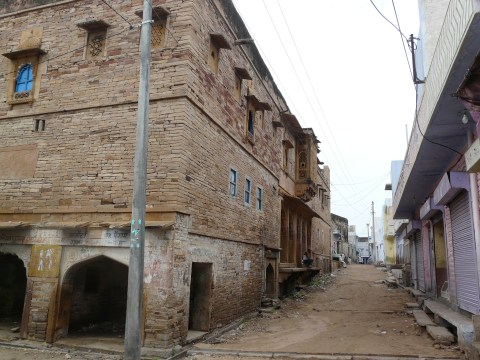
Khatu is the location of one of the four mosques I had discussed in my Four Ghurid Mosques post. The mosque is of significant historical importance, but the rest of the town is pretty intriguing as well. For me, Khatu is an example of the hundreds of small towns across India that have enough going in terms of architectural and urban history to warrant interest by conservators (and even tourists). Unfortunately the town lies in the middle of nowhere both literally and figuratively. Continue reading
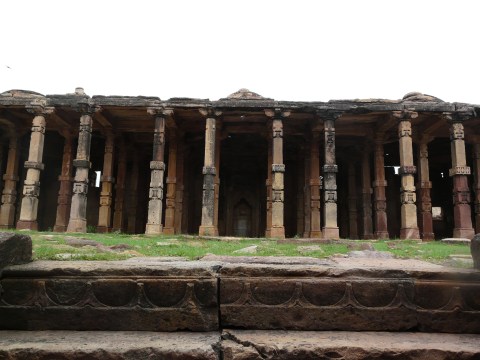
The four mosques discussed in this post are among the earliest royally-sanctioned mosques in north India, dating from the last decade of the 12th c and first decade of the 13th c (1190-1210 AD). All four were built in the wake of the conquest of north India by the armies of Mohammad Ghouri, and are said to be built at the sites of remains of earlier Hindu temples. Continue reading
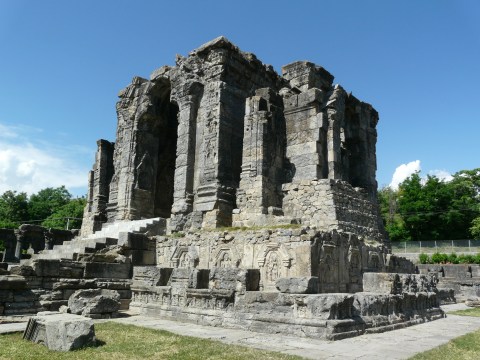
Avantipur and Martand, on the road from Srinagar to Pehelgam, are the site of three imposing Hindu temples. The two temples in Avantipur date from the 9th c AD, and the the largest of the three in Martand is from the 8th c. While all three temples are in ruins, there is enough there (after reconstruction) to give an idea of what stone temple architecture in Kashmir from that time would have looked like. The style of these temples is unique, heavily influenced by the Buddhist Gandhara school of art, which in turn is heavily influenced by Greek and Hellenistic art and architecture. Scholarship mentions that these Kashmiri temples also show direct Roman influences, but I wonder if this influence could also be redirected from later Gandharan times. Continue reading

This is another monument in Srinagar’s old city but is unlike most others, being a royal tomb instead of a mosque/shrine. However it is interesting in a couple of ways, the first being in the architecture of the main mausoleum itself, and the second in the evidence of it having being built at the site of an earlier Hindu temple. Continue reading
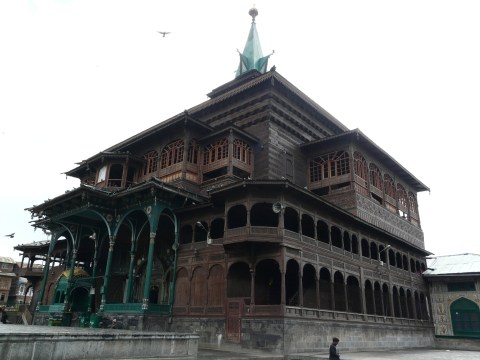
Most of Srinagar’s most famous shrines and mosques lie within or close to the old city. The architecture of these monuments is unique, mostly constructed of wood and brick/stone masonry, with multi-levelled sloping roofs and tall spires reminiscent of Hindu and Buddhist religious structures from the western and central Himalayas. They have elaborately and beautifully ornate polychromatic interiors finished with wood and papier-mache. Continue reading
 Sarson ke Khet