
Kashmiri Gate chaos, Sunday late-morning, Delhi

Kashmiri Gate chaos, Sunday late-morning, Delhi
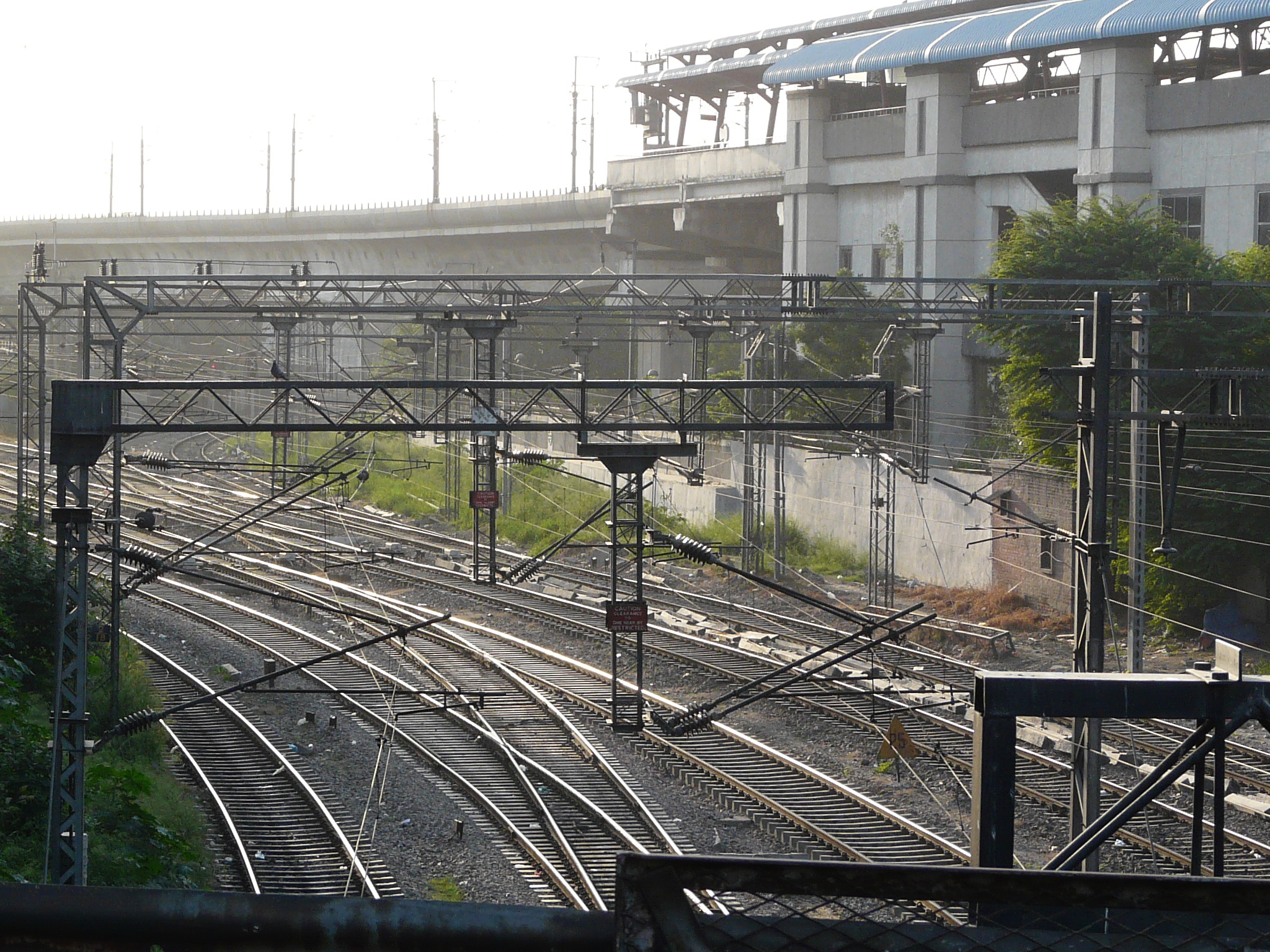
Train tracks at Pulbangash, Delhi.

In my previous post I had mentioned the tomb-mosque complex of Shah Alam in Wazirabad in north Delhi, a saint during Firoz Shah Tughlaq’s time (late 14th c.). While the domes of this complex could always be seen rising above the treeline from the main Ring Road passing behind the structures, the new Wazirabad flyover/bridge (still under construction) has opened up views of the 14th c. bridge associated with the tomb-mosque, so I thought I’d put up a couple of photos of the bridge. Continue reading

Qadam Sharif was originally built by Firoz Shah Tughlaq (14th c.) as a tomb for his son Fateh Khan, but the structure has been heavily altered since. The tomb, now located in the Pahar Ganj area, was enclosed inside an irregular kot (fortification) with gateways to the north and east. Little remains of these fortifications except the eastern gateway and parts of the northern gateway. Both were double gateways. Continue reading

Pir Ghaib is the name given to an unusual and mysterious Tughlaq-era building on the northern ridge, north of Hindu Rao hospital. I had covered that building in my post on Firoz Shah Tughlaq’s Delhi. On my earlier visit to Pir Ghaib I had missed the nearby baoli that is associated with the Tughlaq building. The baoli is from the same period (14th c.) and has an equally mysterious quality to it. Continue reading

From Shahjahanabad’s Kashmiri Gate, the Grand Trunk Road led (and still leads) north and west through Punjab towards Lahore. Just north of Kashmiri Gate, the route was dotted with many pleasure gardens and traveller’s serais. The ruins of some of these still exist throughout north Delhi, most dating back to Mughal times. Continue reading

In a recent post I had covered a couple of mosques and a dargah in the Connaught Place area. Here are a few more older buildings, prominent and not-so-prominent, that lie within sprawling Lutyens’ Delhi. Continue reading

While exploring Old Delhi and adjoining areas like Sadar Bazaar and Pahar Ganj, I’ve come across some deliciously intriguing decades-old cinema halls. Some are doing fine, some just getting along, while some seem to have shut shop or might be under litigation. This post is a visual exploration of those theaters – I haven’t gone into their histories, though I’m sure each and every one would reveal interesting stories with a little digging into. I’m assuming that these cinema halls all came up between the 1950s and 80s, though dates would have to be confirmed. Continue reading
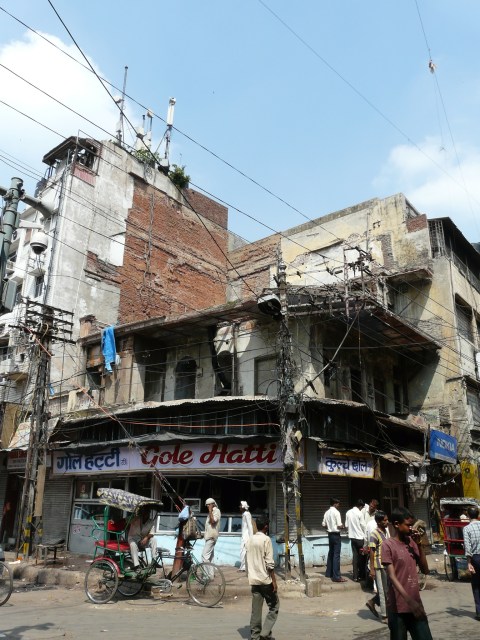
Fatehpuri Chowk was covered in my first post on Shahjahanabad, covering the Khari Baoli and Katra Neel areas. That was back in 2009, when I had visited Fatehpuri Chowk for the very first time. On turning off Chandni Chowk and experiencing Fatehpuri Chowk the first few times (before the place became familiar to me), I very clearly remember feeling that this was what a bustling town in India would have looked/felt like in the 1940s, 50s, 60s Continue reading

There are many large and small structures within the area of “Lutyens’ Delhi” that predate the British imperial capital. This is not surprising since many villages existed in the area where the capital was built, and while most of these villages were razed, some of the religious structures – mosques, dargahs, temples and gurdwaras – were allowed to stand (and many, especially the gurdwaras, have grown in size and importance since then). Mosques were probably the most numerous religious structures, and are easily spotted today as their number and need for specific orientation made them difficult to incorporate into the new urban layout. They jut out onto roads (like the mosque on Janpath) and walkways (like the one on Baba Khadak Singh Marg) and occupy traffic circles (like on Kasturba Gandhi Marg and near Udyog Bhawan). Continue reading
 Sarson ke Khet